Table of Contents
- 1. Experience bhutan's tshechu festival: the perfect trip from india
- 1.1. First, what even is a tshechu?
- 1.2. Meet the phallus (the sacred clown)
- 1.3. What makes the paro tshechu festival special
- 1.3.1. Why paro stands out:
- 1.4. Thimphu tshechu festival, bhutan's capital celebration
- 1.5. The wildest part: just getting there
- 1.6. Why 2026 is a great year to go
- 1.7. Why bhutan is the perfect trip from india
- 1.8. How to plan your tshechu trip
Experience Bhutan's Tshechu Festival: The Perfect Trip from India
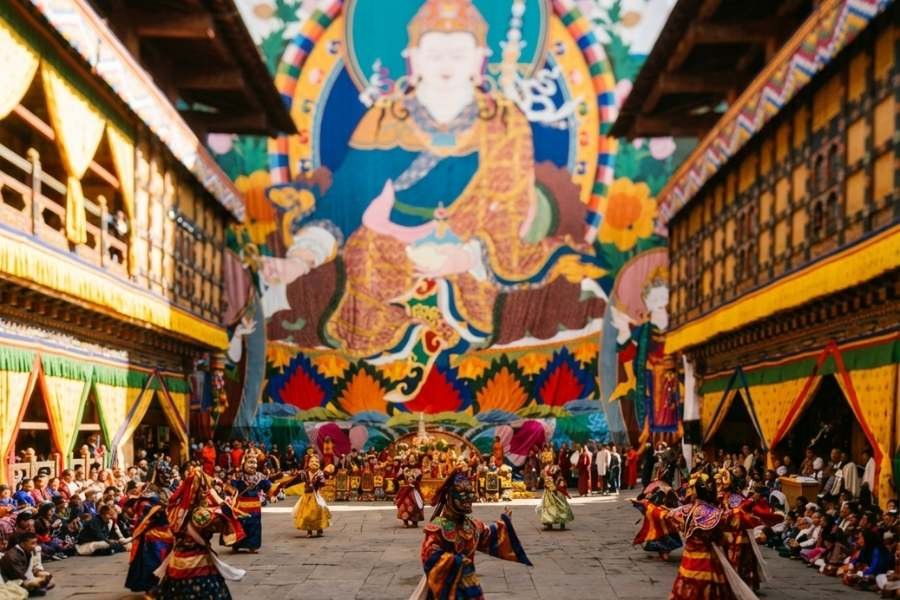
Imagine the bite of the air, the smell of juniper smoke, and the vast crowd of spectators in their glowing silk robes, jammed into the stone courtyard of a 17th-century fortress, all of them staring at one wall, waiting for someone. Then a huge tapestry of silk, four stories high, rolled down the side of the building. Everyone present at that moment put their palms together. There was a great weeping, and many thought that the sight would cleanse their souls from a year’s sin.
It is a Tshechu. If you are in India or planning to go to Bhutan at this time, then it could turn out to be one of the best trips that will leave a long-lasting impression on your life.
Let’s go deeper to know more about the festival below.
First, what even is a Tshechu?
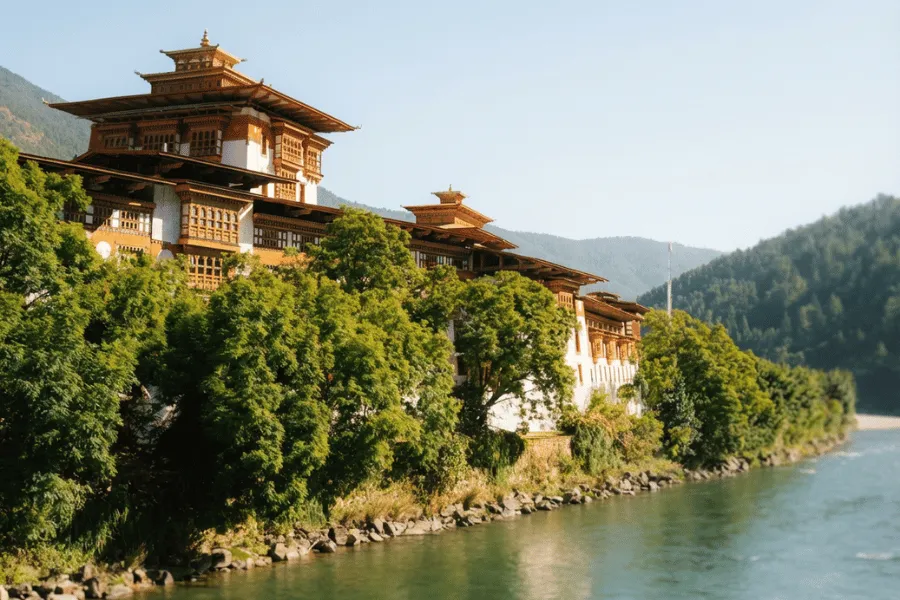
Tshechu means “Tenth Day” and is a religious festival held once a year in each of Bhutan’s districts. It is in honor of Guru Rinpoche, an 8th-century master thought to have brought Buddhism to the kingdom. Every Tshechu is held over the local dzong, the fortress monastery that also functions as the district’s government office and spiritual hub. So basically you’re going to enjoy it inside a town hall that is also a monastery, and it’s 400 years old.
The main event is called Cham, during which monks and laymen perform a wonderful dance show with towering wooden masks and brocade robes so heavy they can make you sweat just by looking at them. But most of the people are not aware of the fact that these are not shows, rather, these shows are believed to earn spiritual merit and scrub away bad karma by just watching them. “So when you see this show, you are not an audience, you are a participant. You are being blessed by being there.”
Meet the Phallus (the sacred clown)
The favorite character of the event is called the Atsara, which is a clown that weaves through the crowd, wearing a red mask with a hawkish nose, a permanent grin, and very often painted in wooden phallus form, which the clown is not shy about.
The Atsara is an enlightened being who has gone beyond shame, ego, and “polite society”. His job is to joke, make fun of the monks, tease old men, bonk your camera, and bless young women for fertility, sometimes by gently tapping them on the head with said phallus. The word “Atsara” comes from the Sanskrit “acharya”, meaning “teacher”. So the clown making the entire crowd laugh in the middle of a solemn ritual is, technically, the wisest one in the room.
What Makes the Paro Tshechu Festival Special
If you only want to visit one Tshechu Festival, you must attend the Paro Tshechu Festival, it is widely considered the holiest and the most beautiful of them all.
Held over five days each spring at Rinpung Dzong, the magnificent “Fortress on a Heap of Jewels” atop a pile of jewels above the Paro River, framed by snow-capped Himalayan peaks in the courtyard. The festival has been celebrated nearly every year since 1644, when it was started with the consecration of the dzong itself. This isn’t some tourist re-enactment, it’s nearly 400 years old and unbroken.
Why Paro stands out:
- The Thongdrel. The four-storey tapestry from the opening scene? That’s Paro’s. The giant silk thongdrel of Guru Rinpoche – some 30 metres long – is unfurled before sunrise on the last morning and rolled up before the sun’s rays can touch it. Its name, in fact, means “liberation on sight”. Pilgrims walk all night so they can be there for it.
- Spring’s perfect timing. Late March to early April is when the rhododendrons are in bloom and the weather is ideal for hiking – so combine the festival with the legendary Tiger’s Nest (Paro Taktsang), perched on its cliff face.
- A soul-filled giant family picnic. Families spread out blankets, distributing ema datshi (chillies and cheese – Bhutan’s fiery national dish) and butter tea, children dart between dancers, and the whole valley thrums with horns and drums. Spiritual but never stilted.
Expected dates: Paro Tshechu 2026 is generally listed as about 29 March – 2 April 2026 (some sources say 30 March – 3 April).
Thimphu Tshechu Festival, Bhutan's Capital Celebration
If Paro is considered to be the most sacred one, the Thimphu Tshechu Festival is the grandest spectacle in the country.
Held in the courtyard of the capital’s Tashichho Dzong, it draws vast, electric crowds. It lasts for three days and begins on the 10th day of the 8th lunar month, usually September or October, when Bhutan’s autumn skies become impossibly clear.
Held in the courtyard of the capital’s Tashichho Dzong, it draws vast, electric crowds. It lasts for three days and begins on the 10th day of the 8th lunar month, usually September or October, when Bhutan’s autumn skies become impossibly clear.
Why Thimphu wins fans:
- Cinematic light. The crisp autumn air and golden afternoons are a photographer’s dream.
- The greatest variety of dances. As the capital’s headline event, it features the widest range of sacred Cham, performed by both monks and lay dancers.
- Simplest foundation. In the capital you’ll find the greatest choice of hotels, the best food scene, and the easiest logistics, ideal for a first-timer who wants comfort with the culture.
The Wildest Part: Just Getting There
Here’s a fact that makes your flight a story you’ll tell for years. Paro is Bhutan’s sole international airport, nestled in a valley ringed by 18,000-foot peaks, and it’s so famously tricky that only around 50 pilots worldwide are certified to land there.
No radar to guide the approach. The whole thing is flown by hand by the pilots, only in daylight, threading between mountains and dropping into the valley with sharp banking turns. They don’t see the runway until they’re a mile or two away. One pilot said flying so low along a ridge, you feel like you can touch the grass and see the inside of the kitchen of a Bhutanese house.
Drukair and Bhutan Airlines fly in from Delhi, Kolkata, Bagdogra, Guwahati, and Mumbai. If you have a window seat on a clear day, you may see Everest, Kanchenjunga, and Jomolhari as you arrive.
And another reason to fall in love with your destination: Bhutan is one of the few carbon-negative countries in the world, with over 70% forest cover, it absorbs more carbon than it emits. Your spectacular festival weekend is taking place in a place that is literally cleaning the air of the planet.
Why 2026 Is a Great Year to Go
Bhutan is having a real moment, and some of the things happening right now are wild enough to spark conversation back home:
- A jungle king. Clears hands: Bhutan is constructing an entirely new “Gelephu Mindfulness City” near the border with India, a brand-new district three times the size of Singapore, planned by the architects of some of the world’s most renowned buildings. The King himself has joined volunteer crews of thousands to clear the land manually. There is a second international airport planned for around 2029, which will finally make Bhutan much more accessible.
- Bhutan is literally betting on Bitcoin: In December 2025, the King promised 10,000 Bitcoin, or about $1 billion, from the national reserves to help pay for that new city. Yes, the Buddhist Himalayan kingdom is also quietly one of the most interesting crypto tales in the world.
- Still gloriously uncrowded: Bhutan’s “High Value, Low Volume” tourism policy means you won’t be elbowing through selfie-stick mobs. The festival you attend will feel like a genuine community celebration and not like a theme park.
Why Bhutan Is the Perfect Trip from India
For Indian travelers, Bhutan is in just the right place: foreign enough to be a real adventure but familiar and easy enough to plan on a whim.
Visa not required. Indian nationals do not need a visa, only an entry permit, which can be obtained online from Bhutan’s immigration portal or on arrival at Paro airport or Phuentsholing land border. Valid passport (6+ months) or voter ID card, plus photos and hotel itinerary. (Aadhaar and driving licenses are no longer valid.)
The fee is a concession for Indians. Indian nationals pay a sustainable development fee of ₹1,200 per person, per night, versus the US$100 rate other nationalities pay. Kids 6-12 are half price, under 6 is free. That rate is good through August of 2027.
It is fast and cheap. Flights from India to Paro usually start at around ₹18,000 one way. Prefer the road? The most popular land route is via the Jaigaon–Phuentsholing crossing from West Bengal. A realistic 5-day trip will cost you between ₹35,000 and ₹70,000 per person, all-in.
How to Plan Your Tshechu Trip
A simple game plan for first-timers:
- Choose your festival. Spring-lover looking for valleys in bloom and the Tiger’s Nest? Go, Paro. Want clear skies in autumn and the biggest party? Thimphu, choose.
- Lock lunar dates. Do not purchase flights until the exact dates in 2026 are confirmed.
- Book 4-6 months ahead. Festival season is a busy one, and there are only so many flights that land in that valley.
- Create a buffer. Just add some Thimphu and Punakha sightseeing around the festival and save the Tiger’s Nest hike for a non-festival morning.
- Dress respectfully. Long sleeves, pants or long skirts, and easy-to-slip-off shoes for the courtyard.