Table of Contents
If you are from Gujarat and want to swap the flight highways with winding Himalayan roads, then you will be making one of the best travel decisions of your life. The day you were sipping chai in Ahmedabad’s 42°C heat, and 48 hours later you found yourselves wrapped in a shawl, watching the sunrise and witnessing the majestic view of the entire Kanchenjunga range turn pink. This is the reason why a Sikkim-Darjeeling tour from Gujarat has become such a favourite among Gujarati families, honeymooners, and senior citizen groups.
But here’s the thing, Sikkim and Darjeeling are not a “book tickets and figure it out later” type of destination. The distance is nearly 2,400 km, the hilly roads are quite slow, permits might be involved if your timing is wrong, and clouds will politely hide every mountain you came to see. Therefore, this guide covers everything, how to get there, when to go, what a good itinerary looks like, what to eat, and what a Sikkim-Darjeeling tour package from Ahmedabad or from any corner of Ahmedabad actually costs in 2026. Let us plan this properly together.
How to Reach Sikkim and Darjeeling from Gujarat
There is no direct flight from Gujarat to the hills, so every Sikkim-Darjeeling tour from Gujarat follows a two-step journey. The gateway to these beautiful hill destinations is the Siliguri Corridor in West Bengal. Siliguri has two entry points, Bagdogra Airport (IXB) and New Jalpaiguri Railway Station (NJP), from which cabs climb into the mountains.
If you are planning to fly from Ahmedabad, Surat, Vadodara, or Rajkot to Bagdogra, you will usually get a one-stop in Delhi or Kolkata. The total travel time is 5-7 hours, and round-trip fares range from ₹9,000 to ₹16,000 per person if you book it 45-60 days in advance, and if you leave it for the last two weeks, ₹22,000. It takes 3 hours from Bagdogra to reach Darjeeling, the distance is 70 km, but the hill kilometres are a different species, and Gangtok is about 4.5 hours away, where you get to see the gorgeous Teesta River alongside.
Travelling by train is considered a budget-friendly option, there are trains from Ahmedabad to NJP, direct or via Howrah/Delhi, which take 32-40 hours. The sleeper fares start from ₹800, and 3AC costs around ₹2,200, which makes it very reasonable for large family groups, but the only thing that sometimes makes it a second option for most people is that it takes two days each way. It becomes a great option for travellers who treat the train ride as part of the holiday, so all you need to pack are your theplas accordingly, which are practically invented for this journey.
There is another alternative option that no one talks about, flying from Ahmedabad to Kolkata, as there can be many cheap direct flights, where you can explore the city and then take an overnight train to NJP. You do a split journey and add a bonus destination, this often saves you ₹3,000-₹4,000 per person.
A pro tip that you can consider is that whatever you choose, make sure to reach Bagdogra and NJP before noon. This is because the hill roads of both Darjeeling and Sikkim, after dark, are slow, sometimes foggy, and no fun after a long journey, and most drivers refuse to start that Gangtok climb after 5 P.M.
Best Time to Visit Sikkim and Darjeeling
For any holiday planning, timing makes or breaks the trip, but here is the honest picture:
- March to May: During this season, you get to see mesmerising natural scenery of rhododendrons and magnolias. As the temperature stays between 10 and 20°C, you get to see clear openings. It becomes a peak season for Gujarati travellers, who want to escape the summer heat. Therefore, the hotels fill up 2 months in advance.
- October to December: This period is considered to be the best time for mountain views because the post-monsoon skies are washed clean, making the air crisp and making Kanchenjunga clearly visible almost every day. During December, it adds snow at Tsomgo Lake and Nathula, so it is advised to bring heavy woollens.
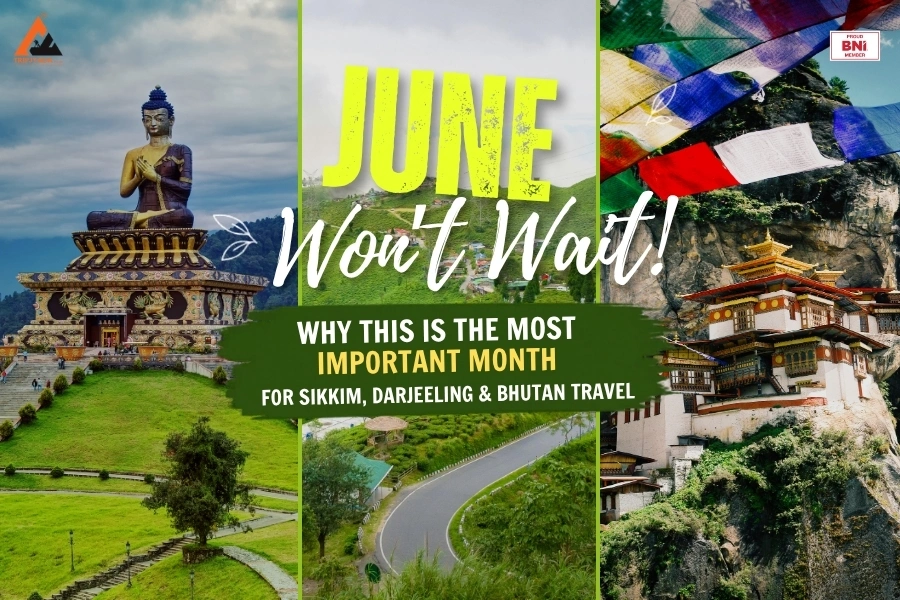
- June to September: It is the most risky season for travellers because during this time there is heavy rainfall that takes place in this region, it causes landslides, blocked highways, leeches on trekking trails, and zero visibility. Even if the hills remain green during this time, you will still see them mostly fogged.
- January to February: If you are someone who loves chilly weather or snow, this season can be very suitable for you because during this time the temperature can touch as low as 1-2°C, even the viewpoints remain empty, and hotel rates come down as it is the off-season.
For many travellers around the nation, April-May and October-November hit the sweet spot between weather, views, and vacation calendars.
A Tried-and-Tested 7-Day Itinerary
Most of the travellers have already done this circuit in 6-8 days. Here is a 7-day plan that does not feel like a school tour.
- Day 1: Arrive at Bagdogra/NJP and then drive straight to Gangtok, which will take around 4.5 hours. Once you check in to the hotel, you can head to MG Marg after a short nap to witness its spotless environment and traffic-free promenade. You can also have the authentic momos from some locally recommended stalls or cafes and savour them while you watch the world go by.
- Day 2: The next day, you will move on to sightseeing near Gangtok, where you will visit famous attractions like Rumtek Monastery, Banjhakri Falls, and Ganesh Tok viewpoint and also enjoy the thrilling ropeway ride over the city. In the evening, you can also visit the local bazaar for shopping and then come back to the hotel for an overnight stay.
- Day 3: You wake up and prepare for a big day as you will move ahead for a full-day excursion to Tsomgo Lake, which is situated at 12,400 ft. After that, you will move to Bab Harbhajan Singh Mandir, you can also add Nathula Pass, where you can stand at the Indian China border and learn about the historic wars that took place out there. You can also enjoy yak rides at Nathula Pass, which cost between ₹ 300 and ₹ 500, and click pictures with your loved ones.
- Day 4: On this day, you will move to Darjeeling from Gangtok, and the time duration of your journey will take approximately 4 hours. On the way, you can stop at the Teesta-Rangeet river confluence and enjoy the breathtaking view of the mountains. In the evening, once you reach Darjeeling, you can take a stroll on Mall Road and Chowrasta and then enjoy a hot cup of exotic tea at Glenary’s.
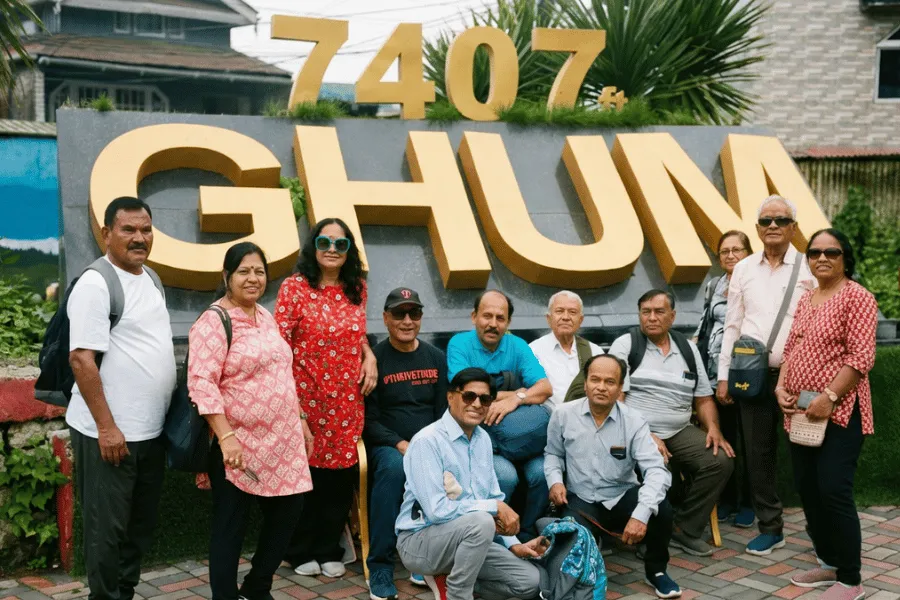
- Day 5: You will wake up at 4 a.m. to see the most famous Tiger Hill sunrise. At that time, you will be experiencing chilly and cold weather but still encounter a crowd. It will be worth every yawn as the Kanchenjunga catches fire in gold. Then move to Batasia Loop, Ghoom Monastery, and then the UNESCO-listed Toy Train joyride.
- Day 6: This day will be quite slow and calm, where you use the day to visit the famous tea garden of Darjeeling and then visit the Himalayan Mountaineering Institute, Padmaja Naidu Zoo, and the Peace Pagoda.
- Day 7: Your beautiful journey comes to an end as you move back to Siliguri to reach Bagdogra/NJP, the whole journey might take around 3 hours.
If you have an extra 2-3 days, you can also add peeling for the glass skywalk and the closest view of Kanchenjunga or go north to Lachung and Yumthang Valley, Sikkim’s “Valley of Flowers”, which is carpeted with blooms every April and buried in snow come December. North Sikkim requires an additional permit and a different vehicle, so it must be booked as an add-on and cannot be decided upon at the moment.
Permits and Documents You'll Need
There is no need for a permit for an Indian citizen to visit Gangtok or Darjeeling, but when it comes to border areas, like Tsomgo Lake, Nathula Pass, and all of North Sikkim, a protected area permit is required, which is issued only through registered local tour operators, therefore, you need to carry the following:
- Aadhaar card or voter ID
- 6-8 passport-size photographs
- Photocopies of your ID for each permit application.
The Nathula Pass is on a quota system and closed on Mon and Tue, so block out that day of your itinerary first. If you book a Sikkim-Darjeeling tour package from Ahmedabad, the operator takes care of every permit – honestly one of the biggest reasons packages beat DIY planning here.
Travel Tips for Gujarati Tourists Visiting Sikkim Darjeeling
This is where most of the guides go generic, but here’s what actually matters when you are heading out on a Sikkim Darjeeling tour from Gujarat.
Food is simpler than you think. Both Gantok’s MG Marg and Darjeeling’s Mall Road have pure vegetarian and Jain-friendly restaurants, and you’ll also find Gujarati and Marwari eateries. Worth trying at least once are veg momos, thukpa, and glass noodle soups from Darjeeling. Options shrink very fast when you visit North Sikkim, so it is advised to pack khakhra, thepla, chevdo and instant poha for excursion days. Most hotels will make simple dal cahwal sabzi to order if you give them a day’s notice.
Layer up but do not bulk up. Even if it is the month of May, Tsomgo Lake can be freezing while Gangtok may feel pleasant. Carry thermals, a windproof jacket, gloves, and a woollen cap instead of one giant sweater. You can also rent snow boots and overcoats for ₹100-₹200 if by any means you are caught off guard.
Do not underestimate the altitude. Tsomgo, Nathula and Yumthang are above 12000 ft. Take it slow, drink plenty of water, have no alcohol the night before, and have Diamox ready after talking to your doctor—very important for the dada-dadis in the group. If you feel dizzy or nauseous, come down; don’t try to power through.
Hindi works everywhere. Language is never an issue, as the locals in Sikkim and Darjeeling speak Hindi fluently. A warm ‘Namaste’ or Sikkimese ‘Tashi Delek’ brings instant smiles.
Money is the hills’ lifeblood. Outside Gangtok and Darjeeling, ATMs are few and far between, and card machines are a rarity at high-altitude stalls and yak-ride counters. Carry ₹10,000–₹15,000 cash per couple. UPI works in the towns but dies with the network on outskirt roads.
Roads test your stomach, not your patience. The drives are spectacular but relentlessly winding. If anyone gets motion sickness, carry Avomine, sit in the front seat, and keep lemon or elaichi useful. Also build in buffer time – a “4 hour drive” happily becomes 6 with rain, traffic, or an army convoy.
Pre-book the toy train and permits. The Darjeeling toy train joyride is fully booked on the IRCTC website days ahead during April-May and Diwali holidays. Nathula too runs out quickly in peak season. Book them both before you leave Gujarat.
Shopping that is worth your suitcase space, Darjeeling tea from an estate (₹400-₹2,000 per 100g depending on flush), Sikkimese prayer flags, hand-knitted woollens from Lall Market, and Temi tea from Sikkim’s only tea garden.
Sikkim Darjeeling Tour Package Cost from Ahmedabad
Now the question every Gujarati planner asks first is, ‘What’s the damage?’ The Sikkim-Darjeeling tour package cost from Ahmedabad depends on three things — trip length, hotel category, and whether flights are included. Here’s a realistic 2026 breakdown per person on twin sharing:
Package Type | Duration | Land Package Only | With Flights |
Budget (2–3 star hotels) | 5N/6D | ₹16,000–₹22,000 | ₹28,000–₹35,000 |
Standard (3-star + good transfers) | 6N/7D | ₹24,000–₹32,000 | ₹36,000–₹45,000 |
Deluxe (4-star, private cab) | 6N/7D | ₹30,000–₹40,000 | ₹45,000–₹50,000 |
Honeymoon special | 6N/7D | ₹25,000–₹32,000 | ₹35,000–₹40,000 |
Usually Included: Hotels on a B&B & dinner basis, private/shared transfers from Bagdogra/NJP, sightseeing as per the itinerary, all standard permits, driver allowances, and tolls.
What is NOT generally included: Lunches, Nathula Pass permit (Extra ₹3,000-5,000 per vehicle), ropeway and toy train tickets, and entry fees at monuments. Personal expenses and North Sikkim add-ons (Lachung/Yumthang) normally cost an additional ₹8,000–₹12,000 per person for 2 nights.
Money-saving tips:
- Travel in a group of 6+ — a shared Innova or Xylo cuts per-head transport costs dramatically. Travel in a group of 6+ — a shared Innova or Xylo cuts per-head transport costs dramatically.
- Book your Sikkim-Darjeeling tour package from Ahmedabad 60-90 days in advance to get the best price on the flight component.
- In the shoulder-season periods of late September or early March, the same hotels give 15–20% discounts. In the shoulder-season periods of late September or early March, the same hotels give 15–20% discounts.
- Compare at least three operators. Get ‘sightseeing included’ in writing. The cheapest quote often quietly excludes Tsomgo Lake as a ‘payable extra’. Compare at least three operators. Get ‘sightseeing included’ in writing. The cheapest quote often quietly excludes Tsomgo Lake as a ‘payable extra.’
A well-planned trip for 7 days, including the flight from Ahmedabad, can cost a couple around ₹80,000 to ₹1,10,000 in total. Like a good trip to Kerala or Rajasthan, but with the third-highest mountain on earth behind you.
Final Word
If you are planning a Sikkim Darjeeling tour from Gujarat, there are three smart moves you should make: Book your flights to Bagdogra 60+ days in advance. Travel in spring or post-monsoon autumn. Let a reliable operator handle the permits and hill logistics. Do that, and all that remains is the fun bit, steaming momos on MG Marg, the whistle of a 140-year-old toy train, and that first jaw-dropping view of Kanchenjunga at sunrise. Gujarat has whetted your appetite for travel, the Himalayas are more than ready to satiate it.