Table of Contents
- 1. Why book bhutan tour packages from mumbai
- 2. Best time to visit bhutan: season and temperature guide
- 3. How to reach bhutan from mumbai
- 4. Suggested bhutan tour itinerary (6 days / 5 nights)
- 5. Top places to visit in bhutan
- 6. Bhutan tour package from siliguri: a popular alternative route
- 7. Hotel prices and package costs
- 8. Documents and permits required
- 9. Bhutan for every kind of traveler: solo, group, honeymoon, and family
- 10. How to choose the best bhutan tour operator
- 11. Why book through tripjyada
- 12. Peak season vs off-season: what to expect
- 13. Which traveler suits which month
- 14. Conclusion: ready to book your bhutan trip
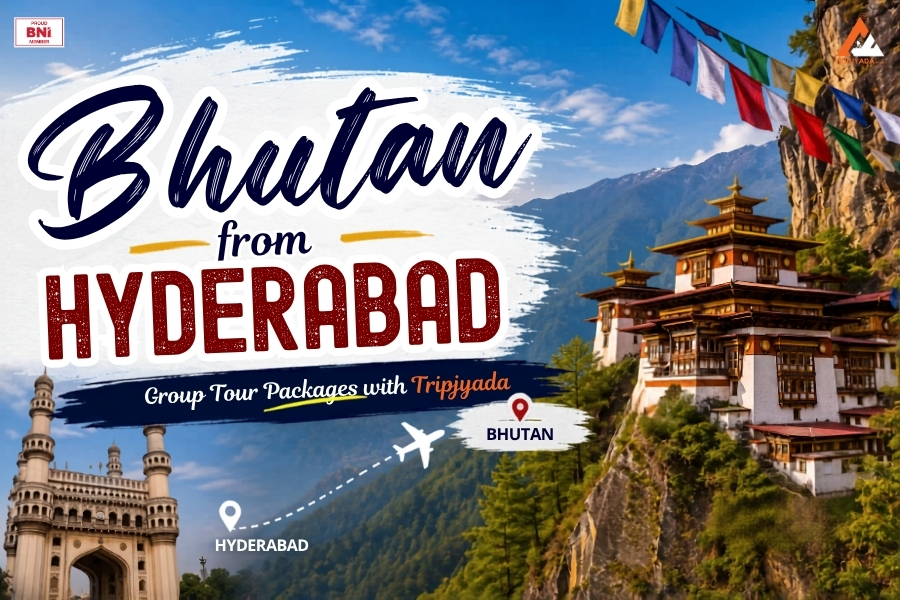
Here is something most people don’t know about Bhutan: before they land in Paro, the only carbon-negative country, its capital, Thimphu, has no traffic lights, and its national airport is so tricky to fly into that it is only favourable to a small handful of pilots worldwide who are certified to land there. You’ll know when you get off the plane why this country measures its success in gross national happiness and not GDP. If this piqued your interest, good. Because once you know the route, booking a Bhutan tour from Mumbai is less than most of these facts suggest. From your flights, permits, hotel prices, weather, and the best Bhutan tour operator to trust and a ready-made Bhutan tour itinerary – this guide will walk you through everything you need to turn your curiosity into a confirmed trip.
Why Book Bhutan Tour Packages from Mumbai
Mumbai does not, surprisingly, have direct flights to Bhutan, even though they look closer together on a map. Hence, most tourists prefer Bhutan tour packages that offer a full package of travel, accommodation, permits, and local transportation. This comes as a surprise to first-timers, as all foreign visitors and Indian nationals have to obtain a permit from a licensed operator even before being allowed to cross the border. You don’t just buy a ticket and show up. A decent package you book will include the permit and the Sustainable Development Fees (SDF) paperwork and, quietly in the background, an English- or Hindi-speaking guide and build in acclimatization days for high-altitude stops like Paro and Punakha, so the only thing you actually have to think about is what you want to see.
Best Time to Visit Bhutan: Season and Temperature Guide
If you ask ten travellers when to visit Bhutan, you will receive ten different answers, and oddly, they will all be right. It depends on what kind of trip they actually want. The mountains change their character according to the seasons.
Season | Months | Average Temperature | Weather Notes | Best Suited For |
Spring | March–May | 15°C–20°C | Blooming rhododendrons, clear skies | Trekkers, photographers, families |
Monsoon | June–August | 21°C–25°C | Heavy rain, slippery trails, lush valleys | Budget travelers, low-crowd seekers |
Autumn | Sept–Nov | 10°C–20°C | Crisp skies, major festivals (Tshechus) | Cultural travelers, honeymooners |
Winter | Dec–Feb | 0°C–10°C | Cold, snow on higher passes | Solitude seekers, snow photographers |
Here’s the twist that most guides leave out: the “worst” season on paper, monsoon, is when Bhutan’s valleys turn the deepest green, and hotel prices quietly drop, making it a favourite among photographers who don’t mind lugging a raincoat. Spring and autumn are good for sightseeing and trekking. Winter is good for budget travel and solitude. The monsoon is good for patience, scenery and savings.
How to Reach Bhutan from Mumbai
As there are no direct flights, every route connects through a connecting city, and which one you pick changes the entire feel of your trip.
- By Air (fastest): You can fly to Kolkata, Delhi, or Gauhati and take a Drukair or Bhutan Airlines flight to Paro. The country has only one international airport, situated between mountains so steep that landing a plane there is considered to be one of the most technically demanding approaches in commercial aviation. The whole travel time is around 5-7 hours, including the layover, and the round-trip flights from these hubs to Paro usually cost ₹18,000 to ₹35,000 per person, in addition to your Mumbai-to-connecting-city domestic fare.
- By Air + Road: Fly to Bagdogra or Guwahati and take a 3-5 hour road trip to the Bhutan border town of Phuentsholing, entering by land. This route is popular with travellers who want to combine Bhutan with North Bengal or Assam.
- By Rail + Road: Take a train to New Jalpaiguri (NJP) near Siliguri, then a shared or private cab to Phuentsholing. It might be the slowest option but also the cheapest, which is exactly why so many operators sell a dedicated Bhutan tour package from Siliguri for travellers coming from the Bengal or Northeast side instead of flying straight into Paro.
Suggested Bhutan Tour Itinerary (6 Days / 5 Nights)
If you are looking for a good Bhutan tour itinerary, then it must contain a well-paced itinerary because it is not just about ticking off dzongs, when it comes down to altitude and mountain roads, it means rushing can actually cost you more than it saves. Down below is a plan that keeps the pace interesting without wearing you out.
Day | Route | Key Highlights |
Day 1 | Arrive Paro → Thimphu (1.5 hrs) | Settle in, evening market walk |
Day 2 | Thimphu sightseeing | Buddha Dordenma, Tashichho Dzong, Memorial Chorten |
Day 3 | Thimphu → Punakha via Dochula Pass (3 hrs) | Punakha Dzong, mountain pass views |
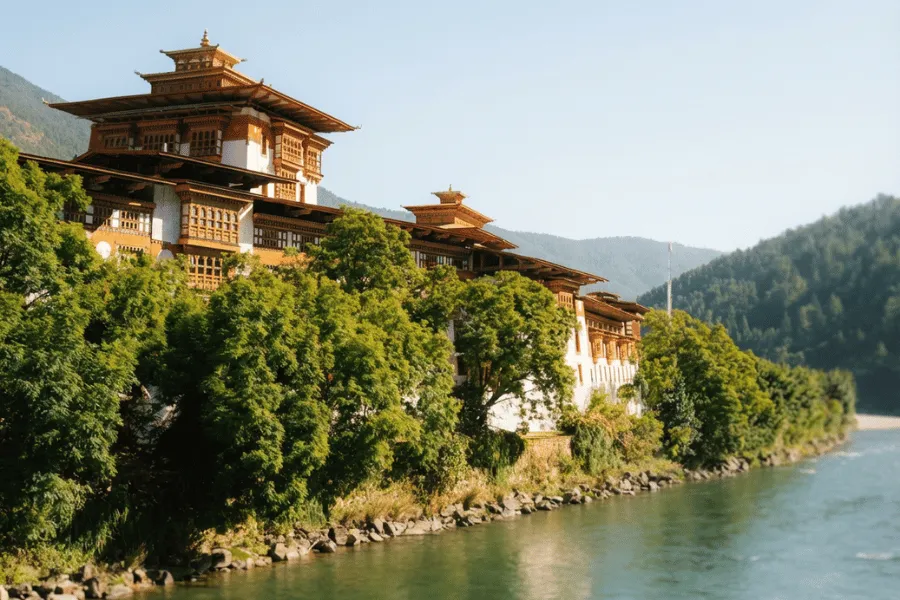
Day 4 | Punakha → Paro | Rinpung Dzong, National Museum |
Day 5 | Paro | Hike to Tiger’s Nest Monastery (Paro Taktsang) |
Day 6 | Departure | Transfer to Paro Airport. |
Of the itineraries, Day 5 is thought to be the one that everyone remembers, as it is a 4-5 hour round-trip hike to a monastery built right into a cliff face, 900 metres above the valley floor, in a place where legend says Guru Rinpoche flew in on the back of a tigress. Travellers taking the 8-9 day option can extend this Bhutan tour itinerary to include Phobjikha Valley, where the endangered black-necked cranes migrate in winter, or the quieter, barely touristed Haa Valley.
Top Places to Visit in Bhutan
It does not matter which Bhutan tour package from Mumbai you choose, these places, which are mentioned below, are the ones most itineraries are built around. Each one of them has its unique story worth knowing before you arrive.
Place | Why Visit |
Paro Taktsang (Tiger’s Nest) | Cliffside monastery tied to a flying-tigress legend; Bhutan’s most iconic image |
Punakha Dzong | Fortress at the confluence of two rivers, built without a single nail |
Thimphu | The only world capital with no traffic lights, traffic is directed by hand |
Dochula Pass | 108 chortens with a Himalayan panorama on a clear day |
Phobjikha Valley | Glacial valley that becomes a winter refuge for rare black-necked cranes |
Haa Valley | Opened to tourists only in 2002, still one of Bhutan’s least-visited corners |
Chele La Pass | Highest motorable pass in the country, with views of Mt. Jomolhari |
Bhutan Tour Package from Siliguri: A Popular Alternative Route
For travellers coming from Mumbai, a road trip through North Bengal before the mountains start is an attractive option, and a Bhutan tour package from Siliguri is a good alternative to consider. You fly Mumbai to Bagdogra and then drive around 170 km (4–5 hours) to Phuentsholing and overland into Thimphu and Paro. It is much cheaper than flying directly to Paro, and the Siliguri-based operators often combine 5-7 day packages covering Phuentsholing, Thimphu, Punakha and Paro at lower per-day rates. It’s good for budget travellers. For those who like road trips and watching the landscape change slowly rather than skipping straight to the mountains.
This route is highly advantageous for tourists who wish to combine a trip to Bhutan with a more comprehensive East Himalayan trip rather than a stand-alone visit, since NJP and Bagdogra are the two primary entry points for Darjeeling, Gangtok, and the remainder of Sikkim. Due to the well-established road connections between the two, it is common to start in Bhutan and spend a few days in Gangtok or Darjeeling on the way back. However, it’s crucial to remember that your actual immigration and permit procedures take place at Phuentsholing itself. As a result, you should budget a few extra hours for documentation at the border, particularly if you’re crossing during peak season when lines get longer. Although the road links between Bagdogra and Phuentsholing are normally rather good, landslides during the monsoon months might cause delays, so if you are travelling between June and August, it is worthwhile to verify the real-time road status with your operator.
Hotel Prices and Package Costs
The most perplexing section that worries first-time bookers is this one. Bhutan’s Sustainable Development Fee (SDF) is not included in the cost of your package and is not optional; rather, it is charged entirely separately from your accommodation and tour expenses. Indian nationals must pay a reduced SDF of ₹1200 per adult per night starting in 2026, with a 50% discount for children aged 6–12 and full exemption for children under 6. This is a small amount compared to the USD 100 per night charged to the majority of other foreign nationals. This fee is paid for at the permit stage, and your operator will cover the cost of your hotel, meals and transportation.
Hotel Category | Price per Night, per Person (Twin-Sharing) |
Budget (3-star) | ₹2,500 – ₹4,000 |
Standard/Deluxe (4-star) | ₹4,500 – ₹7,000 |
Luxury (5-star / boutique resorts) | ₹9,000 and upward |
A full 6-day, 5-night package that includes SDF, lodging, meals, private transportation, and a guide will normally cost between 35,000 and 65,000 per person for a base tier and up to 100,000 per person for a luxury experience. When you include flights from Mumbai to Bagdogra or Paro, the reasonable all-in price is between ₹55,000 and ₹120,000 per person, depending on the hotel category and season.
Documents and Permits Required
The good news is that Indian citizens do not need a visa for Bhutan at all, just a permit, which is a far simpler process than most countries require. All you need is the following:
- A valid Voter ID card or passport (passport must have at least 6 months’ validity if used).
- Two passport-sized photographs.
- A permit issued through your licensed tour operator, who also processes your SDF payment.
- Children need a birth certificate or passport as proof of identity.
This one detail subtly determines how easy or difficult your trip will be because the Tourism Council of Bhutan’s licensed operators can grant this permit.
Bhutan for Every Kind of Traveler: Solo, Group, Honeymoon, and Family
Because the “right” itinerary relies largely on who is travelling, no two Bhutan tour experiences are the same.
Traveler Type | Recommended Pace | Ideal Months | What to Prioritize |
Solo traveler | Flexible, can join group cabs for lower cost | Sept–Nov, Mar–Apr | Homestays, monastery hikes, joining a small group to cut per-night cab costs |
Couples / Honeymooners | Relaxed, fewer stops per day | Sept–Nov | Boutique or riverside resorts, private transport, sunset points |
Group of friends | Adventure-heavy, room for treks | Mar–May, Oct–Nov | Shared cab costs, add-on treks like Jomolhari or Druk Path |
Family with kids | Slower pace, shorter drives per day | Oct–Nov | Kid-friendly stops, avoiding long treks, 4-star hotels with reliable food |
Senior citizens | Minimal altitude change per day | Mar–Apr, Oct–Nov | Avoid tackling high passes in one go, keep basic medication handy |
How to Choose the Best Bhutan Tour Operator
Although there are plenty of companies that offer Bhutan tour packages from Mumbai, the best Bhutan tour operator for you will typically be shown by a few key details:
- Licensing: Verify that they are registered with the Bhutan Tourism Council; otherwise, they are unable to lawfully grant your permit.
- Transparent pricing: Rather than concealing everything behind a single ambiguous figure, a reliable operator breaks down the SDF, hotel expenses, transportation costs, and guide fees.
- Local presence: Compared to resellers using a spreadsheet, operators with a real ground team in Thimphu or Paro are far better at handling emergencies, itinerary changes, and permit delays.
- Flexibility and reviews: Before you spend a dime, you can learn a lot from recent traveller reviews and a willingness to tailor the Bhutan trip itinerary to your interests and season.
- Written inclusions: Before any money is transferred, obtain a written copy of the hotel category, meal plan, car type, and cancellation policy.
The quickest way to determine which Bhutan tour operator is providing genuine value and which has subtly removed the important details is to compare at least three quotes for the same itinerary.
Why Book Through Tripjyada
Every international visitor’s journey must go through a licensed operator due to Bhutan’s permission system, making the choice of agency more important here than on nearly any other vacation. This is precisely where Tripjyada is designed to make a difference:
- Reliability on the ground: Tripjyada’s local teams in Thimphu and Paro react promptly to landslides, road closures, or flight delays into Paro, which are frequent enough during the winter and monsoon seasons that having someone on the ground truly matters.
- Sincere itinerary planning: Tripjyada paces each Bhutan tour itinerary according to altitude, driving duration, and what you truly want to see, as opposed to packing every dzong and pass into a single tiring day.
- Fair, itemised pricing: You know precisely what you’re spending for because each Tripjyada quote breaks out the SDF, hotel, meals and transportation separately. There is no bundled figure with no explanation.
- Sincere local knowledge: Tripjyada’s guides are able to recommend Haa Valley over a packed Paro weekend or the precise week that Dochula Pass clears for the finest mountain vistas. This is the kind of information that comes from being there, not from a brochure.
- After-booking assistance: Tripjyada is accessible throughout your travel, from permit status to last-minute plan modifications. This is especially important once you’re halfway through a strange country with poor connectivity.
Ask Tripjyada for an itemised quote before making any early payments if you’re comparing Bhutan tour operators. This is the simplest method to see the difference between a well-planned vacation and one that isn’t.
Peak Season vs Off-Season: What to Expect
There is no one “right” time to travel to Bhutan; whether you arrive during a festival week or the calm monsoon season, the same trip may feel entirely different. Knowing precisely what trade-off you’re making on either side of the calendar is helpful before choosing your dates.
Factor | Peak Season (Mar–May, Sept–Nov) | Off-Season (Jun–Aug, Dec–Feb) |
Hotel prices | 20–30% higher than average | 15–25% lower than average |
Booking lead time | Book 6–8 weeks ahead for hotels & flights | Little to no advance booking needed |
Crowd levels | Busy at Tiger’s Nest, Punakha Dzong | Quiet monasteries, fewer tourists |
Weather risk | Low — generally clear and stable | Rain in monsoon; possible snow-blocked passes in winter |
Ideal for | First-timers wanting reliable weather | Repeat visitors, photographers, budget travelers |
What makes peak-season pricing: Around the Thimphu Tshechu in autumn and the spring bloom in March–April, hotel rates in Paro and Thimphu rise noticeably, and popular 4-star properties near Tiger’s Nest or Punakha often sell out weeks in advance. Paro flights fill up just as quickly, Drukair and Bhutan Airlines operate a limited number of daily flights into the country’s only airport. If you insist on travelling in high season, book your permit and hotel the moment you have firm dates, rather than a month out from departure.
What travelling in the off-season actually feels like: Monsoon months bring a different Bhutan, savings aside, the waterfalls swell, the valleys turn a deeper green, and the monasteries empty out enough that you can sit with the silence at places like Punakha Dzong instead of navigating a crowd. Winter has its own trade-off: some high passes like Chele La may close briefly after heavy snowfall, so check road status with your operator before finalising a winter itinerary. And in return, the best days of December and January often offer the best, most photogenic mountain views of the year.
Which Traveler Suits Which Month
Traveler Type | Best Months | Why |
Families with young children | October–November | Mild weather, festivals, good road conditions |
Trekkers and adventure travelers | March–April, October–November | Clear trails, stable weather |
Budget travelers | June–August, January–February | Lowest hotel and package rates |
Photographers | February, October | Phobjikha cranes and snow peaks; autumn colors and festivals |
Honeymooners | September–November | Comfortable weather, scenic drives, fewer logistical hassles |
Conclusion: Ready to Book Your Bhutan Trip
Bhutan stays with you long after the trip is over – perhaps it’s the silence at Dochula Pass or the boldness of a monastery built into a cliff. Getting there from Mumbai does require a little more planning than your average domestic holiday, but none of it is difficult once you know what to expect. No direct flight, a mandatory permit and SDF, a season that works with your style of travel, and an operator you can trust to take care of all of it seamlessly.
Quick reminder before booking:
- Choose your route – direct flight via Paro or overland via a Bhutan tour package from Siliguri.
- Choose your season depending on your budget, weather resistance, and interests.
- Shortlist and verify licensing and reviews of your Bhutan tour operator.
- Ensure your itinerary includes time for acclimatisation and covers your must-see sites.
- Get an itemised quote for SDF, hotels, meals, transport & guide fees.
- Prepare your Voter ID/passport and photographs for the permit application.
Bhutan rewards those travellers who plan a little ahead. Book your tour packages from Mumbai to Bhutan with a reliable, licensed operator, pick your season with intent, and you will come home with a lot more than photographs of the Tiger’s Nest.