
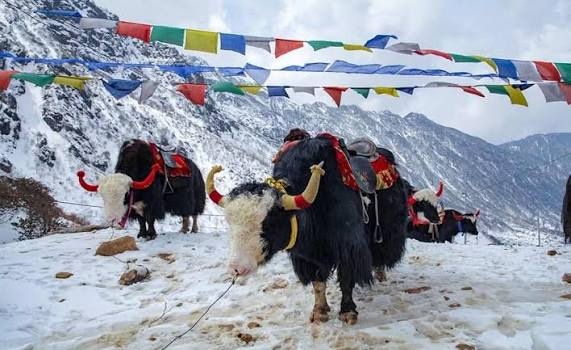
Winter in Sikkim is a trade-off and a good one. You lose the warm weather. In return, you get snow-dusted passes, empty monasteries, and sharp mountain views. Hotels are happy to see you as well. It could be the best season of all for travellers who like quiet rather than crowds.
Winter in Sikkim is a trade-off and a good one. You lose the warm weather. In return, you get snow-dusted passes, empty monasteries, and sharp mountain views. Hotels are happy to see you as well. It could be the best season of all for travellers who like quiet rather than crowds.
So what are the best things to do in Sikkim in winter? Mood sort. Some are for the snow chasers, some are for the culture lovers, and some are just for those who want a warm mug and a window view.
So, first of all, let’s have a reality check on the weather.
What Winter Looks Like in Sikkim
Winter runs roughly from December to February. Month Feel Good for December Cold, clear, festive Snow, festivals, New Year January Coldest, month Quiet stays, snow at altitude February Slowly warning Culture, calm trips, fewer crowds Gangtok and Pelling are towns that get cold, but it rarely snows.
Winter runs roughly from December to February.
Month | Feel | Good for |
|---|---|---|
December | Cold, clear, festive | Snow, festivals, New Year |
January | Coldest, month | Quiet stays, snow at altitude |
February | Slowly warning | Culture, calm trips, fewer crowds |
Gangtok and Pelling are towns that get cold, but it rarely snows. Snow is mostly an elevated story, so roads and access matter. Now for the fun part.
Mood One: Chasing Snow
Tsomgo Lake and Nathula A classic winter day trip from Gangtok . Frozen water, white slopes, thin crisp air. Wear layers and take waterproof gloves. Permits are required , and Nathula is open on limited days. Heavy snow can close the road, so check with your operator.
Tsomgo Lake and Nathula
A classic winter day trip from Gangtok. Frozen water, white slopes, thin crisp air. Wear layers and take waterproof gloves.
Permits are required, and Nathula is open on limited days. Heavy snow can close the road, so check with your operator.
Lachung and Yumthang
The valley is white and quiet, and there are hot springs nearby to soak in for warmth. Sikkim winter sightseeing, one of the most beautiful, but only when roads are open. Very cold nights are forecast.
Zuluk and the Old Silk Route
Patient, well-prepared travellers are rewarded with winding roads and snowy slopes. Stuff can be complicated; use a local driver and be flexible.
Mood Two: Culture and Calm
Spend Time in Monasteries Rumtek, Pemayangtse, Tashiding and Enchey are particularly atmospheric in winter. The chanting, incense, and butter lamps are warmer in the cold. Catch a Winter Festival The Sikkimese new year, Losoong, is often in late December, and the Tibetan new year, Losar, can be in February. At these times, dances and feasts in masks are common.
Spend Time in Monasteries
Rumtek, Pemayangtse, Tashiding and Enchey are particularly atmospheric in winter. The chanting, incense, and butter lamps are warmer in the cold.
Catch a Winter Festival
The Sikkimese new year, Losoong, is often in late December, and the Tibetan new year, Losar, can be in February. At these times, dances and feasts in masks are common. Dates are based on the lunar calendar, so check for your year!
Visit the Museum and Old Quarter
The Namgyal Institute of Tibetology in Gangtok has rare manuscripts, statues, and ritual objects. “A perfect cold day for an afternoon.
Stay in a Homestay
Sightseeing lists pale in comparison to a family’s stories, a bonfire and home-cooked meals. Pelling, Yuksom and Ravangla are good villages to choose from.
Mood Three: Clear Skies and Slow Views
Watch Kanchenjunga at Dawn Winter air is dry, which means long-range clarity. Best views are from Gangtok and Pelling. Be there before the sun comes up, with a flask of tea. Walk the Pelling Skywalk The glass walkway alone is worth the trip on clear mornings.
Watch Kanchenjunga at Dawn
Winter air is dry, which means long-range clarity. Best views are from Gangtok and Pelling. Be there before the sun comes up, with a flask of tea.
Walk the Pelling Skywalk
The glass walkway alone is worth the trip on clear mornings. Combine with Pemayangtse Monastery and the ruins of Rabdentse.
Sip Tea at Temi
Temi Tea Garden in South Sikkim is a peaceful winter stop. Walk the rows, then have a hot cuppa.
See the Giant Buddhas
Ravangla and Namchi are easy, restful stops for families and older travellers.
Want to know what to eat while you’re thawing? Read more.
Winter Food Worth Seeking Out
Momos and thukpa. Dumplings and noodle soup steaming. Tongba. A wooden mug of hot millet drink with a bamboo straw. Gundruk soup. A sour fermented green soup.
- Momos and thukpa. Dumplings and noodle soup steaming.
- Tongba. A wooden mug of hot millet drink with a bamboo straw.
- Gundruk soup. A sour fermented green soup.
- Sel roti. A ring-shaped rice bread, usually made for festival occasions.
- Butter tea. An acquired taste. Worth a go.
Sikkim is also India’s first organic state, so the vegetables are likely to be fresh.
Why Winter Might Be Worth the Cold
Winter has real advantages that peak season just can’t beat. Fewer crowds outside of the Christmas and New Year weeks. Many hotels offer better prices, especially in January and February. Long mountain views in clear, dry air.
Winter has real advantages that peak season just can’t beat.
- Fewer crowds outside of the Christmas and New Year weeks.
- Many hotels offer better prices, especially in January and February.
- Long mountain views in clear, dry air.
- Snow, if you can reach the right altitude
The price is the cold.” Mornings are cold, days are short, and plans can change due to road closures. If you can be flexible, the things to do in Sikkim in winter reward you with silence, space, and scenery that summer crowds never get to see.
Winter Evenings in the Hills
Nights arrive early, so evenings are part of the experience. Heat up a bowl of thukpa or a cup of tongba. If your homestay has a bonfire, sit around it.
Nights arrive early, so evenings are part of the experience.
- Heat up a bowl of thukpa or a cup of tongba.
- If your homestay has a bonfire, sit around it.
- Street food and lights on MG Marg.
- Go to bed early. Early risers are rewarded with views of the sunrise.
Bring a torch with you; the hill lanes can get dark quickly.
Sikkim Winter Attractions: What to Skip
Cold doesn’t work for all things Goechala is very cold and a difficult high-altitude trek. Snow can block access to Far North Sikkim.
Cold doesn’t work for all things
- Goechala is very cold and a difficult high-altitude trek.
- Snow can block access to Far North Sikkim.
- Night drives. Hill roads are dangerous because of fog and ice.
Choosing the best places Sikkim winter offers involves knowing what to skip. Less is more; do it well.
A Simple Sikkim Travel Guide Winter Itinerary
Here is a six-day plan for winter travel in Sikkim: Day 1: Arrival in Gangtok. Walk MG Road. Day 2: Tsomgo Lake & Nathula (weather permitting & permit required) Day 3: Visit Rumtek Monastery, Namgyal Institute.
Here is a six-day plan for winter travel in Sikkim:
- Day 1: Arrival in Gangtok. Walk MG Road.
- Day 2: Tsomgo Lake & Nathula (weather permitting & permit required)
- Day 3: Visit Rumtek Monastery, Namgyal Institute. Drive to Pelling.
- Day 4: Kanchenjunga sunrise, Skywalk, Pemayangtse.
- Day 5: Ravangla, Temi Tea Garden.
- Day 6: Drive back to NJP or Bagdogra.
If conditions look stable, add 3 days for Lachung and Yumthang. • One buffer day for snow delays.
What to Pack
Thick coat and thermal pants Woollen socks, gloves and a hat Traction waterproof boots Sunglasses and sunscreen, from the glare…
- Thick coat and thermal pants
- Woollen socks, gloves and a hat
- Traction waterproof boots
- Sunglasses and sunscreen, from the glare of the snow
- Lip balm and cream
- Altitude and motion sickness tablets and other basic medicines
- Cash; ATM machines are rare in the north
Practical Tips for Winter Travel
Book now for the Christmas and New Year weeks. Look for permits. Indians don't need any for Gangtok and Pelling but need them for Tsomgo, Nathula and North Sikkim. Make sure to check road conditions before any long drive.
- Book now for the Christmas and New Year weeks.
- Look for permits. Indians don't need any for Gangtok and Pelling but need them for Tsomgo, Nathula and North Sikkim.
- Make sure to check road conditions before any long drive.
- Begin early. The days are short, and hill roads are slow, with cold.
- Enquire about heating. Not all hotel rooms are well heated.
Rules and conditions change all the time, so check them out before you finalise your things to do in Sikkim in winter.