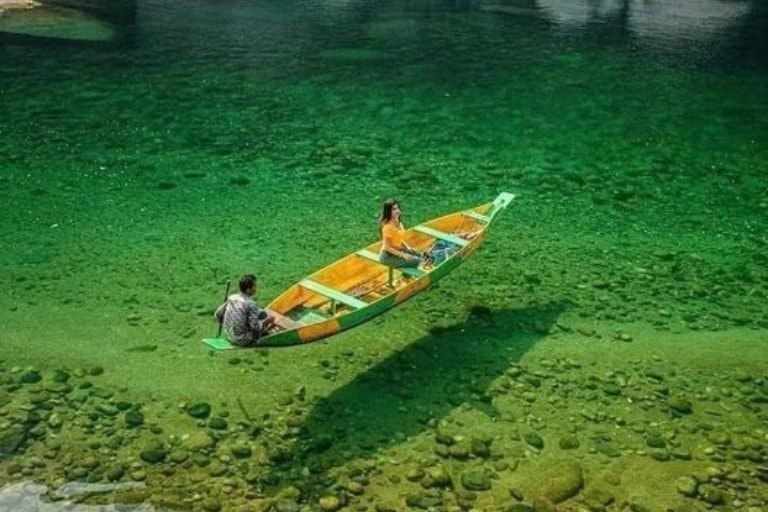
Meghalaya holds some of the world's longest cave systems alongside some of India's most striking waterfalls — many within reach of Cherrapunji and the Jaintia and Garo Hills.
Caves to Explore
- Siju Cave: Garo Hills; 4 km long (1 km accessible). One of India's oldest limestone caves, known for its bat colony and the Princess Di Chamber's stalactites.
- Liat Prah Cave: Jaintia Hills; 34 km long — India's longest cave system, including the vast Airbell Chamber, with new passages still being discovered.
- Mawmluh Cave: Cherrapunji; 7.2 km long. Known for rock formations that record a 4,200-year-old climate shift, plus marine fossils.
- Krem Puri: Mawsynram; 24.5 km long. The world's longest sandstone cave, discovered in 2016, containing 70-million-year-old Mosasaurus fossils.
- Arwah Cave: Near Cherrapunji. Known for fossilised fish, shells and other marine life dating back millions of years.
- Krem Liat Prah: Jaintia Hills. Home to the "Great Wall," one of the widest known underground passages.
- Mawsmai Cave: Cherrapunji. Meghalaya's most accessible cave, with natural skylights and limestone formations — suited to first-time visitors.
Waterfalls to See
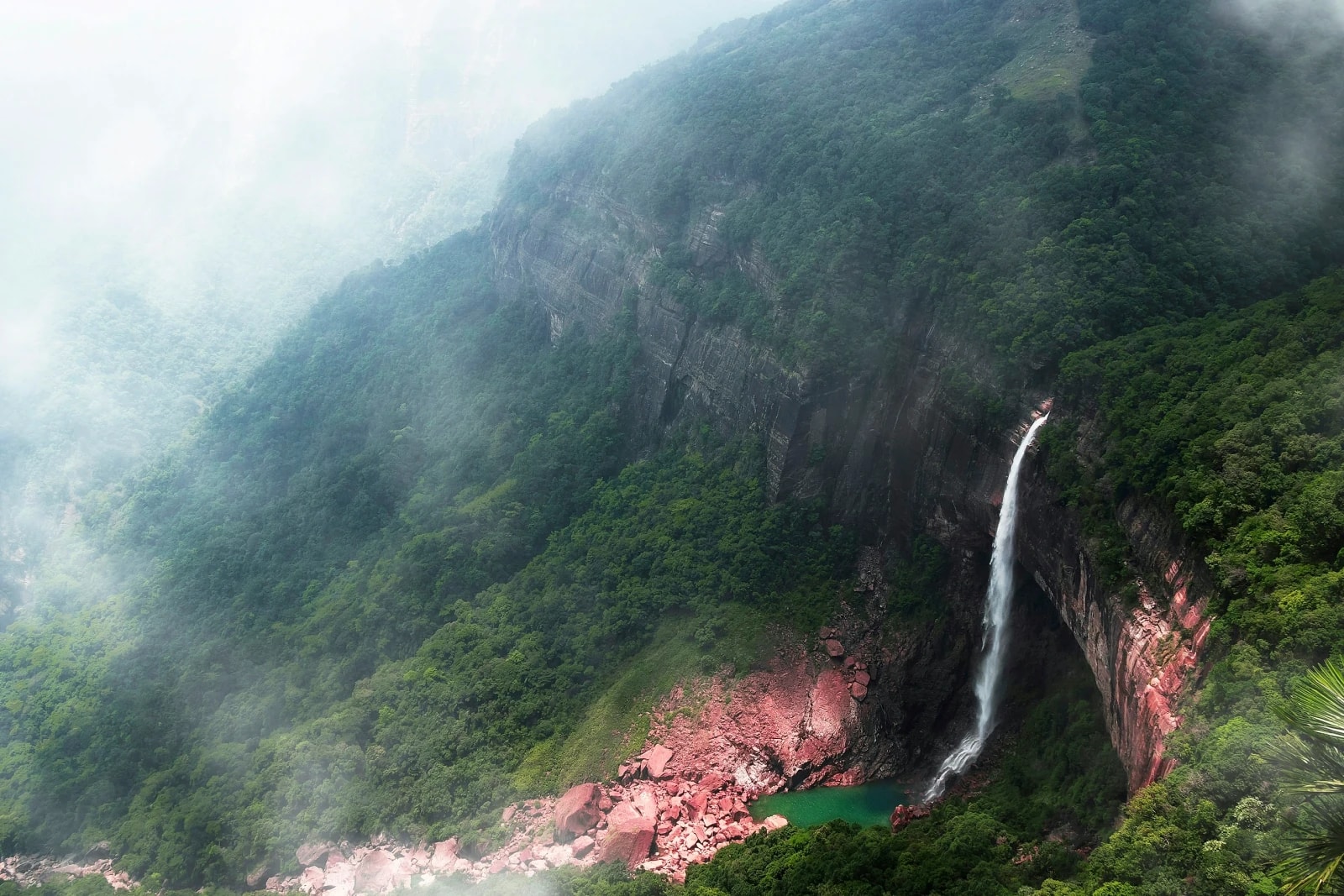
- Nohkalikai Falls: Cherrapunji; 1,115 ft — India's tallest plunge waterfall, tied to the local legend of Ka Likai.
- Wei Sawdong: Near Cherrapunji. A three-tiered waterfall with turquoise pools, best in the morning light.
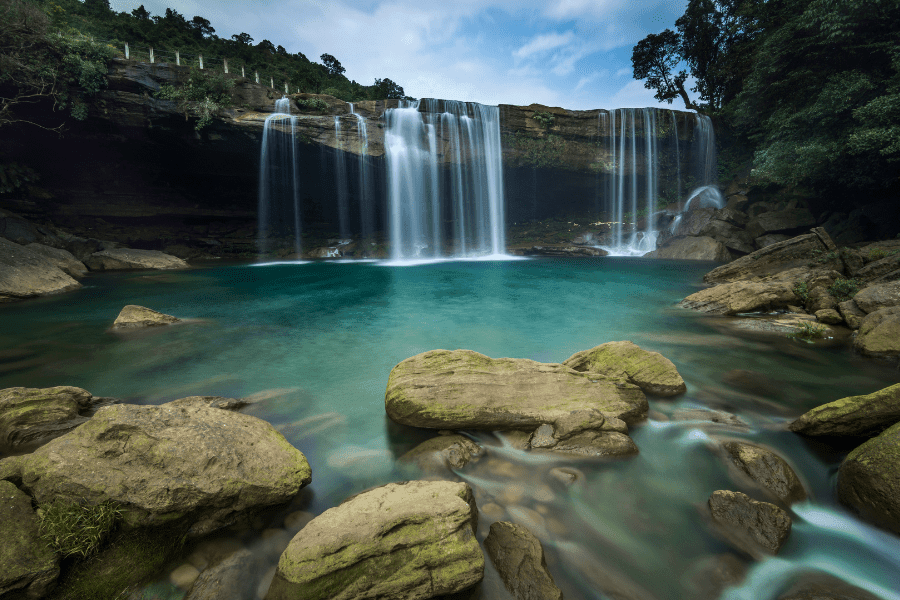
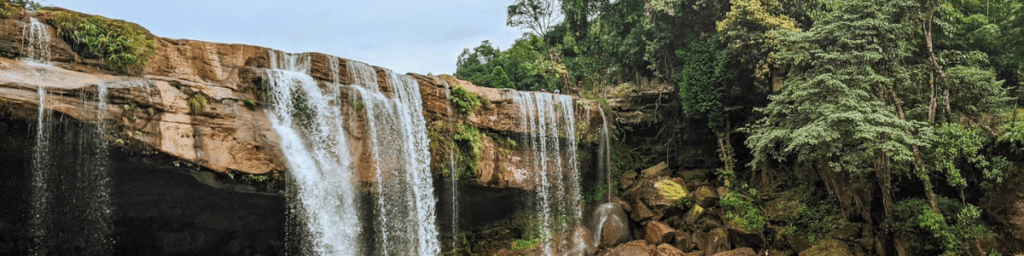
- Krang Suri: Jaintia Hills. Clear blue water, with a path leading behind the falls; best visited October to February.
- Langshiang Falls: West Khasi Hills. One of Meghalaya's highest-volume waterfalls, most powerful shortly after heavy rain.
- Elephant Falls: Shillong. A three-tiered waterfall and one of the easiest to reach from the city.
- Seven Sisters Falls: Cherrapunji. Seven parallel streams, most dramatic during the monsoon.
- Kynrem Falls: Cherrapunji; 1,001 ft — Meghalaya's tallest waterfall, best seen during the monsoon, near Thangkharang Park.