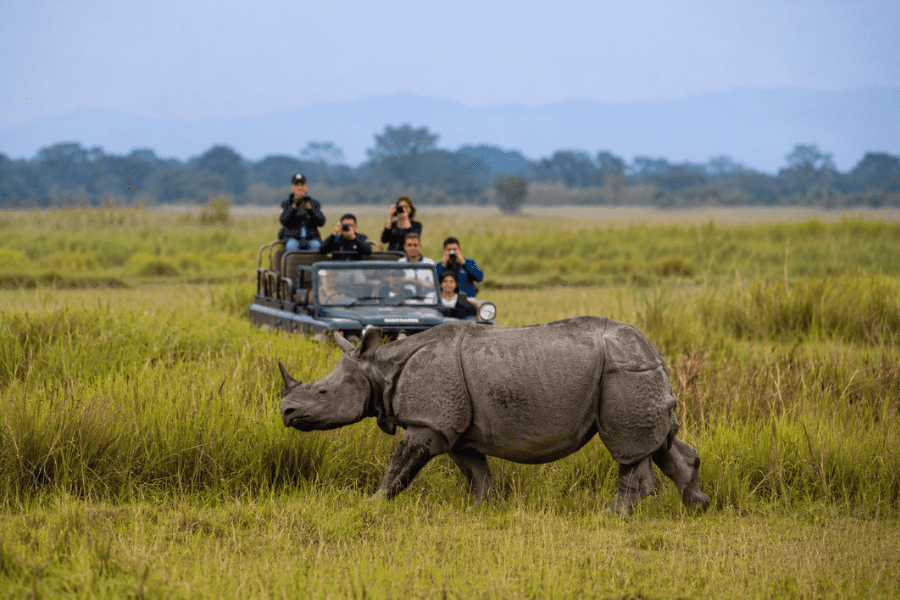
Kaziranga National Park in Assam is a UNESCO World Heritage Site and home to the largest population of one-horned rhinoceroses in the world, alongside Bengal tigers, wild water buffalo, swamp deer and more than 500 bird species. A jeep safari is the standard way to cover its grasslands and floodplains.
Safari Zones
- Central Range (Kohora): The most popular zone, with open grasslands and the highest density of rhino sightings; best in early morning or late afternoon.
- Western Range (Bagori): Less crowded, with denser vegetation and the best odds of spotting a tiger, along with wild boar, buffalo and large elephant herds; best early morning.
- Eastern Range (Agaratoli): Bordered by the Brahmaputra River, favoured by birdwatchers for storks, pelicans and river dolphins; best in the winter months (November–March).
- Burapahar Range: The least-explored zone, with dense forest, hilly terrain, gibbons and langurs, plus short trekking options; good year-round.
Best Time to Visit
- Winter (November–February): The best season for wildlife sightings, as animals come out to bask in the sun and migratory birds arrive.
- Spring (March–April): Pleasant weather and lush greenery, good for photography.
- Monsoon (May–September): The park closes entirely due to flooding, since it sits on the Brahmaputra's floodplain.
Combine With Bhutan
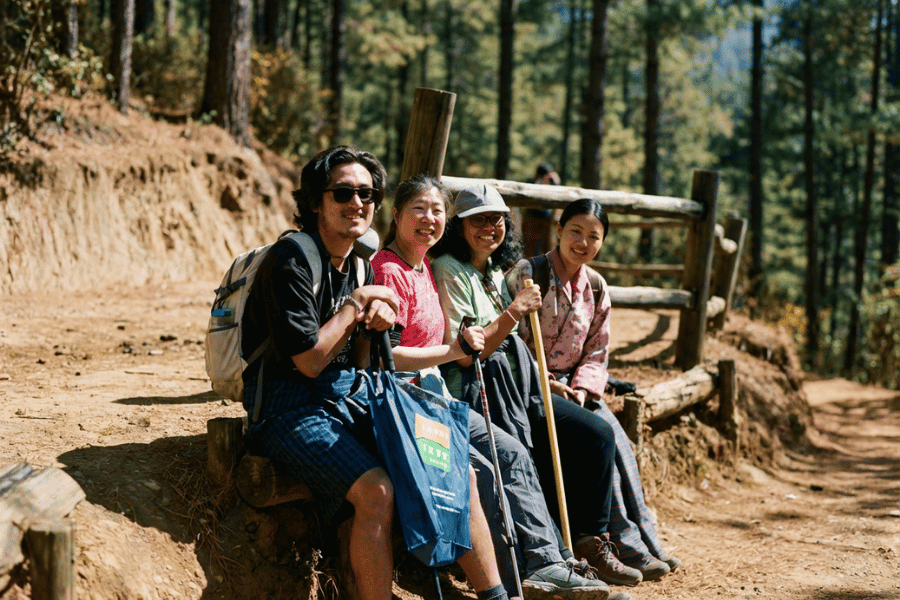
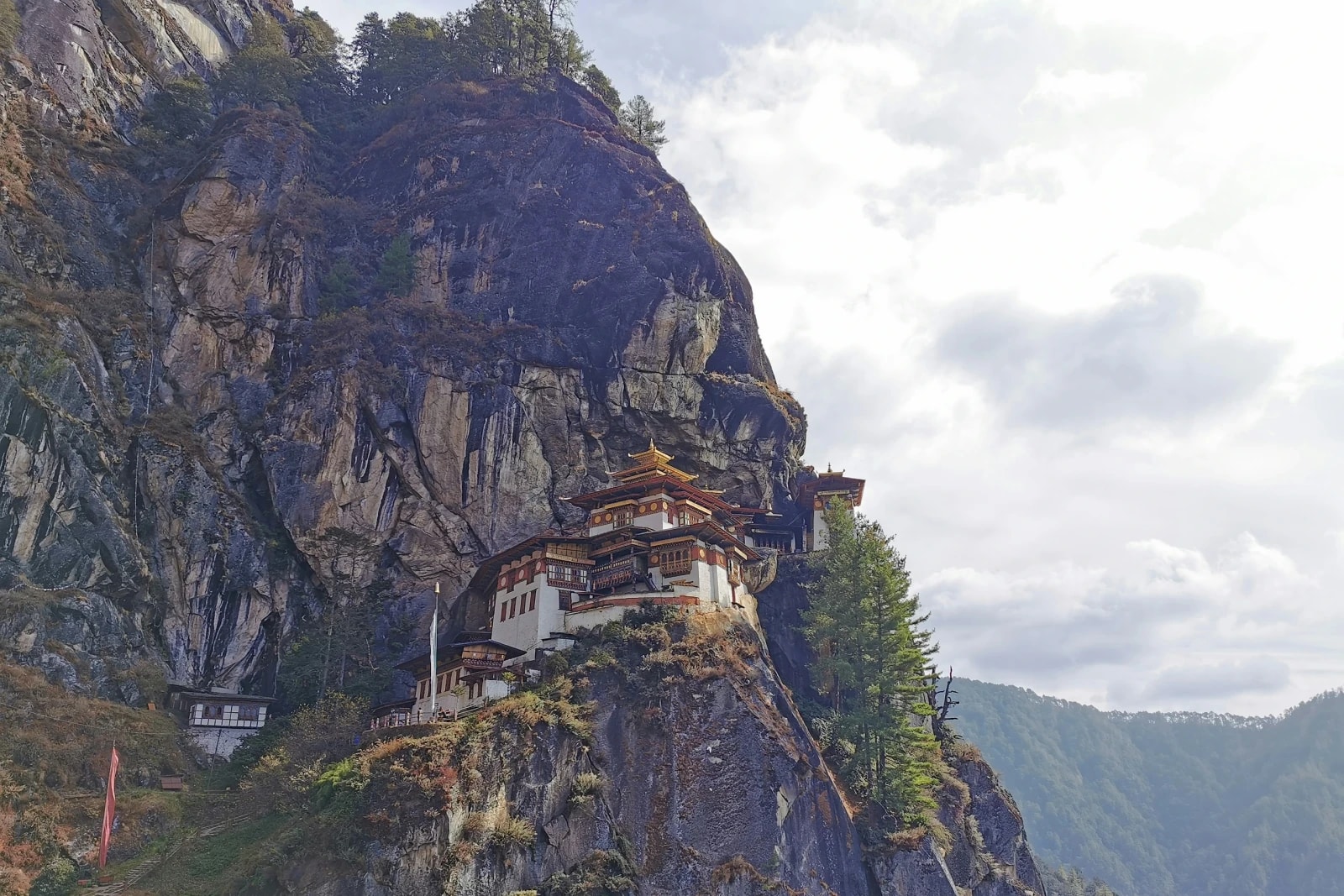
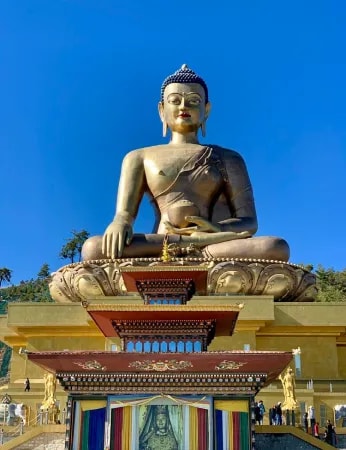
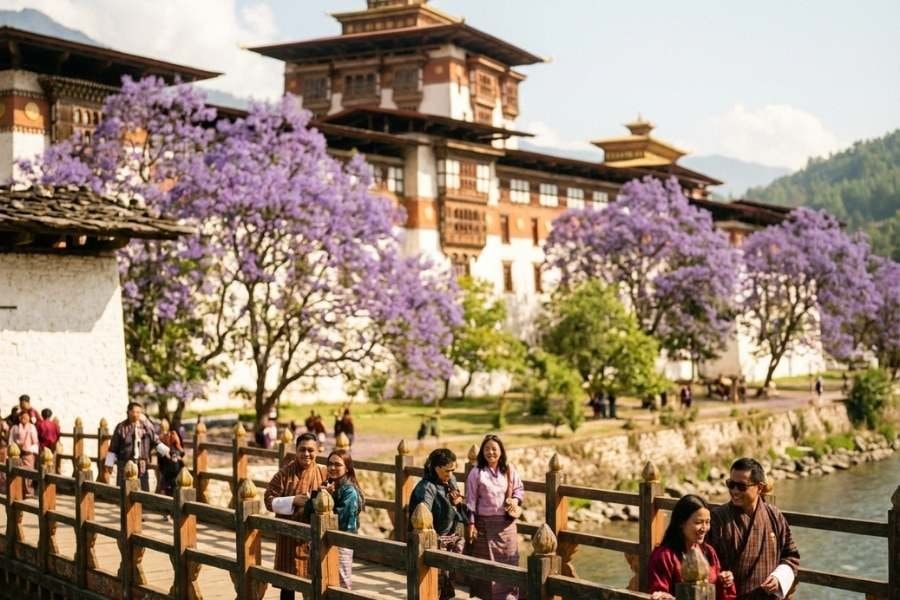
Travellers looking to extend the trip often continue on to Bhutan's Paro Taktsang (Tiger's Nest) trek — about 4 km one way, rated moderate to challenging, and best done in spring (March–May) or autumn (September–November).
Travel Essentials
- Nearest Airport: Jorhat Airport (JRH) or Guwahati Airport (GAU)
- Nearest Railway Station: Furkating Junction (FKG)
- Best Time to Visit: November to April (the park is closed May–September)