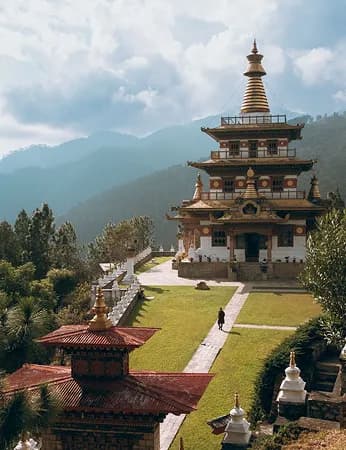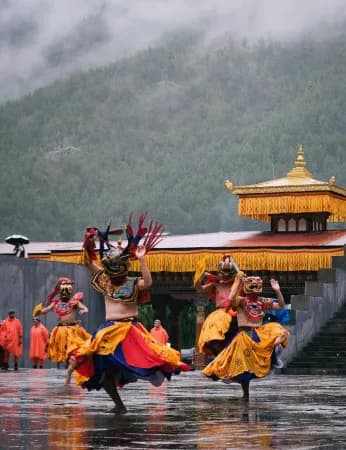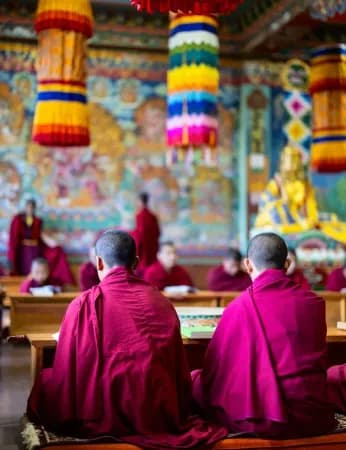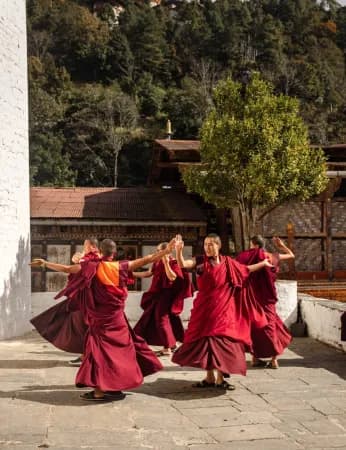
Thimphu
Bhutan's capital, blending modern life with tradition.
Things to do
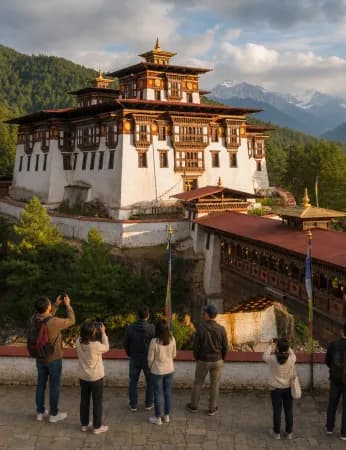
- Visit Tashichho Dzong, the fortress-monastery housing the king's throne room and offices
- See the National Memorial Chorten, a stupa built for Bhutan's third king
- Learn about local culture at the Folk Heritage Museum and National Textile Museum
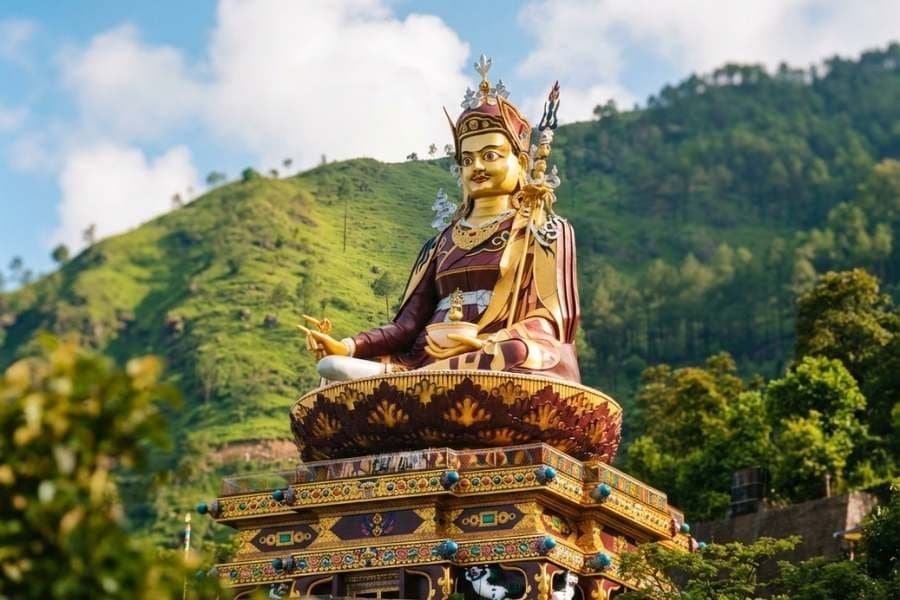
- View the city from below the towering Buddha Dordenma statue
Paro
Home to Bhutan's only international airport, set in a lush valley surrounded by hills.
Things to do
- Hike to Tiger's Nest Monastery (Taktsang Palphug), Bhutan's most iconic sight — a 3-5 hour round trip up to a cliffside perch
- Visit Rinpung Dzong, a fortress-monastery showing classic Bhutanese architecture
- Stop at Kyichu Lhakhang, one of Bhutan's oldest temples
Punakha
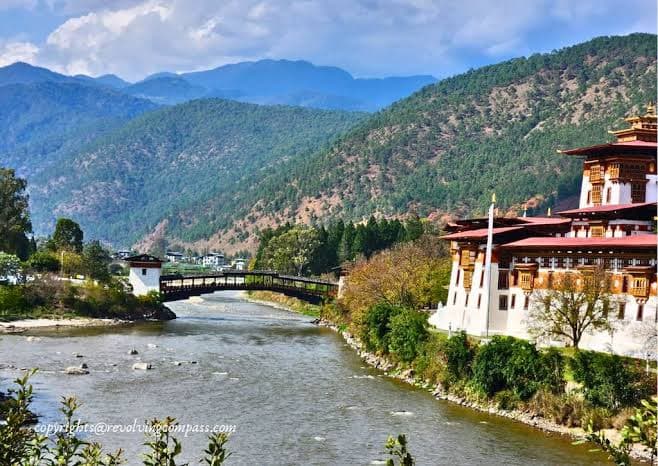
Home to Punakha Dzong, widely considered Bhutan's most beautiful fortress, at the meeting point of the Pho Chhu and Mo Chhu rivers.
Things to do
- See the dzong's whitewashed walls and golden roofs, at the site where Bhutan's first king was crowned
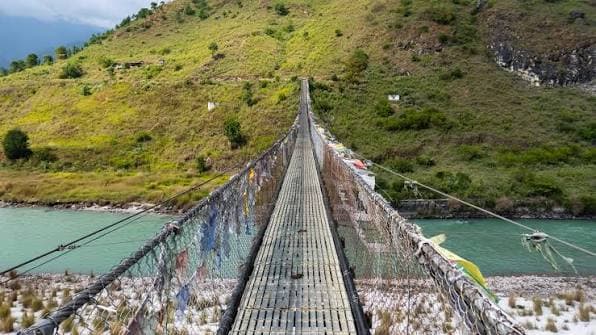
- Cross the Punakha Suspension Bridge, one of the longest in Bhutan, for river and valley views
Trongsa
A historic central Bhutan town built around Trongsa Dzong, the country's largest fortress and a site central to Bhutan's unification.
Things to do
- Wander the dzong’s courtyards, passageways and temples
- Visit Ta Dzong, a former watchtower now a museum of Bhutanese history
Bumthang
Considered Bhutan's spiritual heartland, spread across four valleys — Chokhor, Tang, Ura and Chhume.
Things to do
- Visit the revered Jambay Lhakhang and Kurjey Lhakhang temples
- Time a visit around the Jambay Lhakhang Drup festival for traditional dance and ritual
Phobjikha (Gangtey) Valley
A glacial valley and winter home to the endangered black-necked crane.
Things to do
- Visit Gangtey Monastery, perched on a hill above the valley
- Walk the Gangtey Nature Trail for panoramic valley views
Best time to visit: Winter, to see the migrating black-necked cranes
Mount Chomolhari
A sacred 7,326 m peak reached via the Chomolhari Trek, one of Bhutan's most popular trekking routes.
Things to do
- Trek through alpine meadows and past glacial lakes, with stays in remote village communities along the way
Wangdue Phodrang
A central Bhutan district known for bamboo crafts and slate carving; its dzong is currently being rebuilt after a fire.
Things to do
- Visit Rinchengang Village, a traditional settlement near the dzong, for a glimpse of rural Bhutanese life
Jigme Dorji National Park
Bhutan's largest national park and a biodiversity hotspot, home to snow leopards, red pandas and Himalayan blue sheep.
Things to do
- Trek and birdwatch near Laya Village, home to a semi-nomadic community within the park
Phuentsholing
The main overland entry point on the India-Bhutan border, with a blend of Bhutanese and Indian influences.
Chele La Pass
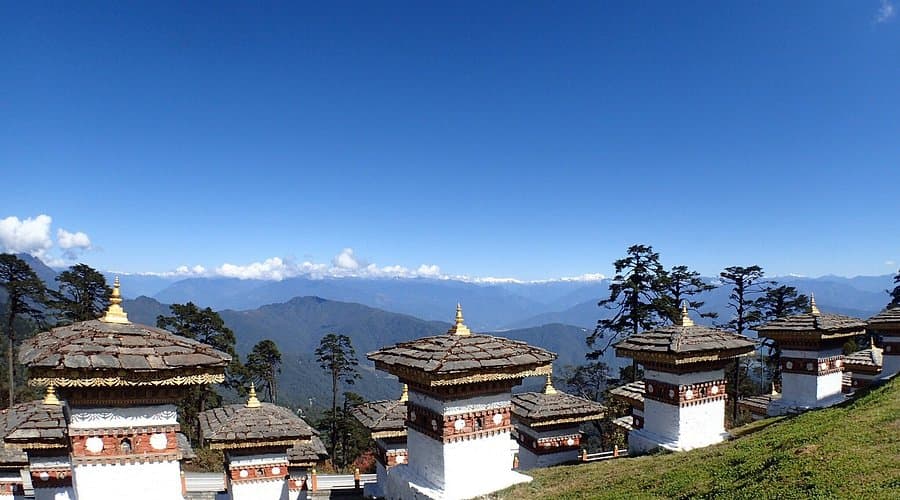
At 3,988 m, the highest motorable pass in Bhutan, with views over the snow-capped Himalayas and Haa Valley.
Things to do
- Hike to Kila Gompa, a cliffside nunnery
- Look out for Mt. Jomolhari and Taktshang Monastery in the distance
- Watch for rare Himalayan birds and wildflowers along the drive
Haa Valley
One of Bhutan's least-visited and most untouched valleys, ringed by forest and hills.
Things to do
- Visit Lhakhang Karpo (White Temple) and Lhakhang Nagpo (Black Temple)
- Time a visit for the Haa Summer Festival, with yak riding and traditional dance
- Trek through pine forest along the Haa River
Month by Month: Where to Go in Bhutan
January
Winter (December to February): Cool by day and cold at night, roughly -2°C to 15°C, with snow at higher elevations.
Best places: Phobjikha (Gangtey) Valley
February
Winter (December to February): Cool by day and cold at night, roughly -2°C to 15°C, with snow at higher elevations.
Best places: Phobjikha (Gangtey) Valley
March
Spring (March to May): Daytime temperatures sit between 10-25°C — warm, pleasant days with cool evenings.
April
Spring (March to May): Daytime temperatures sit between 10-25°C — warm, pleasant days with cool evenings.
May
Spring (March to May): Daytime temperatures sit between 10-25°C — warm, pleasant days with cool evenings.
June
Summer (June to August): Warm and humid, roughly 15-30°C, with frequent light rain that keeps the landscape green.
July
Summer (June to August): Warm and humid, roughly 15-30°C, with frequent light rain that keeps the landscape green.
August
Summer (June to August): Warm and humid, roughly 15-30°C, with frequent light rain that keeps the landscape green.
September
Autumn (September to November): 10-25°C with clear skies and crisp air — widely considered the best weather of the year.
October
Autumn (September to November): 10-25°C with clear skies and crisp air — widely considered the best weather of the year.
November
Autumn (September to November): 10-25°C with clear skies and crisp air — widely considered the best weather of the year.
December
Winter (December to February): Cool by day and cold at night, roughly -2°C to 15°C, with snow at higher elevations.
Best places: Phobjikha (Gangtey) Valley
Plan your trip to Bhutan
- Getting Around
- Foreign visitors (apart from Indian nationals) travel with a registered Bhutanese tour operator, with transport pre-arranged — typically an SUV or Land Cruiser for mountain roads, a tourist van for groups, or a local taxi within Thimphu and Paro.
- Flying In
- Paro International Airport is Bhutan's only international airport, and one of the most challenging in the world to land at — only a small number of pilots are certified for its mountain approach.